
Sunday
1 MarHow SEO Reporting Should Help Decisions, Not Confuse Clients
A good SEO report should make performance obvious. You should be able to see what’s working, what isn’t, and what to do next without wading through charts for half an hour.
When it doesn’t, a client opens their report, notices keyword rankings are up, traffic hasn’t moved, and the conversation stalls. No clear explanation or next step. Just a sense that something’s happening, but nobody’s sure what.
This guide is about fixing that. It shows how to build SEO reporting that turns metrics into decisions, so client conversations move forward instead of going in circles.
Let’s start with what reporting should do in the first place.
What Is SEO Reporting and Why Clients Get Lost in the Numbers
SEO reporting tracks how your website performs in search engines by measuring keyword rankings, traffic patterns, and technical health over time. The problem starts when these reports cram too much in at once, mixing keyword rankings with technical issues and engagement metrics beside traffic graphs.
Clients want to know if their business is growing and getting found through organic traffic. When the dots don’t connect between SEO metrics and real outcomes, they disengage instead of getting excited about progress.
For example, Google Analytics might show bounce rates and session duration next to referring domains and Core Web Vitals. But without context or explanation, the whole report loses meaning and clients are left second-guessing whether SEO reporting is helping or just creating more homework.
The Main Purpose Behind Tracking Keyword Rankings
If you don’t track where your site ranks, you won’t know if your SEO strategy is reaching the right audience or just spinning its wheels. Here’s what keyword rankings actually tell you.
Rankings Show Visibility, Not Revenue
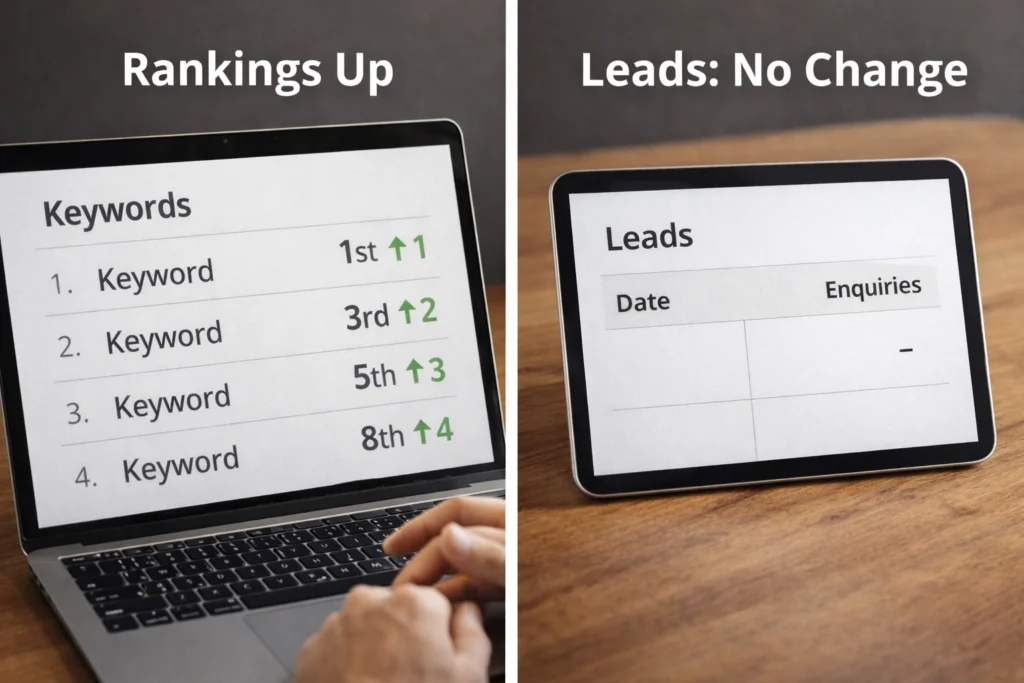
High rankings don’t equal conversions. Yes, ranking high gets more eyes on your site, but conversions depend on search intent, page experience, and how well your offer matches what people need.
For instance, ranking first for “Brisbane marketing agency” might bring organic search traffic, but if your landing page talks about enterprise services and visitors are small businesses, none of that traffic converts. Tracking keyword rankings helps you watch visibility trends over time, not predict revenue.
Search Engine Positioning Reflects Market Reach
When you rank well for terms your target audience searches, you’re putting your business in front of people at the exact moment they’re looking for help. Consistent rankings across related keywords suggest you’re building real domain authority in your space. So monitor position changes. That way, you’ll know how well your content continues to match what search engines expect to rank
Google Analytics Fills in the Context
Rankings show where you appear in search results, but they don’t show what happens after someone clicks. Google Analytics fills that gap by revealing how visitors behave once they land on your site. It uses metrics like average time on page and bounce rate to show whether people found what they were looking for.
Combining ranking improvements with these engagement metrics helps you see if better visibility in search traffic leads to more enquiries or sales.
Confusing Metrics: How They Erode Client Confidence
Imagine opening a bank statement that lists 50 different transactions but doesn’t show your account balance. Confusing, right? SEO metrics without context feel exactly the same.
For example, you send a client a report showing impressions up 40%, CTR at 3.2%, and clicks fluctuating across pages. But if you don’t explain what any of it means for their business, the numbers don’t connect to anything they recognise, like more phone calls or enquiries. The client closes the report confused and unsure what the metrics say about their SEO performance.
When clients can’t see how data ties to outcomes that affect their revenue, doubt replaces trust. They start questioning whether your SEO efforts are working at all. Clear explanations that link SEO metrics to business goals are what turn confusing stats into actionable insights, which builds confidence instead of eroding it.
What Belongs in a Client-Friendly SEO Report
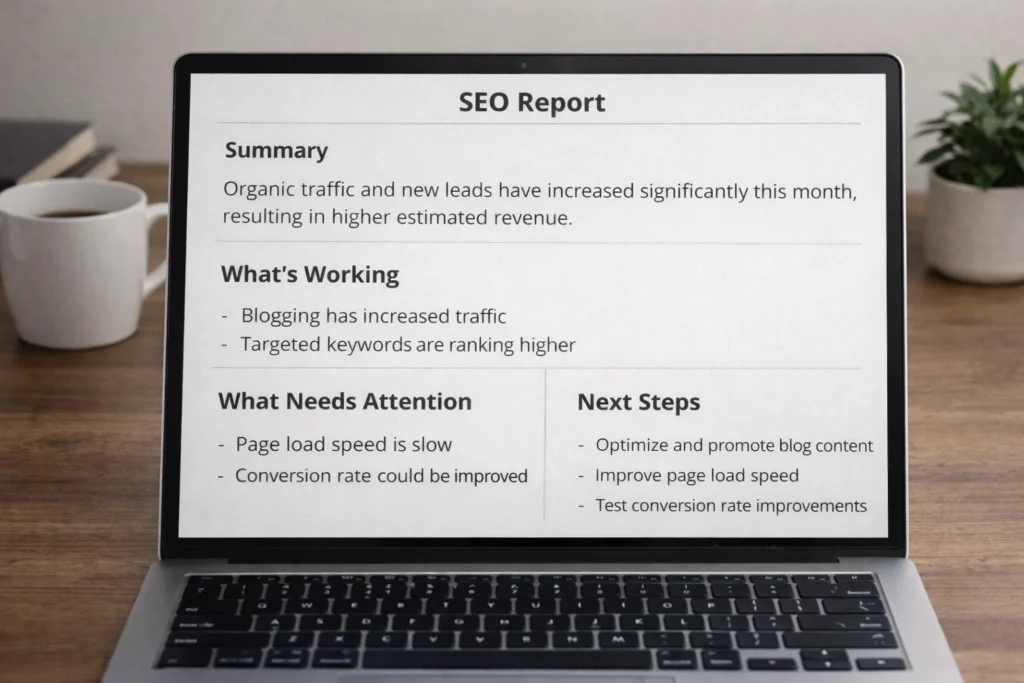
Clients rarely spend more than a few minutes with reports, so every section needs to answer: Is this working or not? Focus on metrics that tie directly to their business goals, including:
- Plain-Language Overview: Answer the big question right away: Are things moving in the right direction? This section should take less than a minute to scan and give clients the main takeaway before they dive into details.
- Keyword Rankings for Priority Pages: Show where their important pages rank in Google Search and explain what position changes mean for visibility. A monthly SEO report that tracks these rankings over time helps clients see patterns instead of reacting to single-month fluctuations.
- Organic Traffic from Google Analytics: Have pages that bring in organic traffic? Highlight them and show what visitors do once they land. Connect metrics like bounce rate and session duration to real outcomes. For example: “Your services page had 800 visitors this month, with 45 enquiry form submissions, up from 32 last month.”
- Link Building Progress: If backlinks are part of your strategy, show growth in referring domains and explain how it supports their rankings. Skip this section if link building isn’t active in their campaign right now.
Avoid cluttering reports with technical issues like broken links, Core Web Vitals, or meta descriptions unless they’re directly impacting performance this month. The fewer unrelated metrics you include, the easier clients to focus on what’s actually working.
Making Reports Work for Your Client’s Business Goals
When reports connect data to outcomes, clients recognise, they stop feeling like passengers and start seeing themselves as part of the strategy. The key is showing clients not just the numbers, but what those numbers mean for their business. That way, every metric tells a story they understand and care about.
For example, instead of “your ranking improved by 5 positions,” try “more people searching for your services can now find you because you’re showing up higher in search results.” When you hit the nail on the head by framing it that way, clients get it immediately.
You can do the same with traffic. Tie increases to landing pages that drive enquiries or sales, so clients see the connection between better rankings and real revenue opportunities. For instance, if organic traffic to their contact page went up 30% and form submissions followed, that’s a story worth telling.
When technical fixes improve Core Web Vitals or speed up load times, explain how that keeps visitors on the site longer and stops them from bouncing straight off. Don’t just say “page speed improved.” Say “faster load times mean visitors stick around instead of leaving before your page even loads.”
That’s how SEO performance becomes something clients can visualise and value.
Common Reporting Mistakes That Leave Clients More Confused

You can build a solid report with all the right metrics, but one poorly explained section can undo the clarity you’ve worked to create.
One of the biggest mistakes we see is using technical jargon without explanations. Dropping terms like “referring domains” or “Core Web Vitals” without context can make clients feel like they’re missing half the conversation. Take a sentence or two to explain what each metric measures and why it matters.
Reporting too many metrics at once is another common mistake. When numbers compete for attention, nothing stands out, and the whole report starts to blur.
Finally, not explaining changes in metrics can leave clients worried instead of informed. Explaining that fluctuations may result from algorithm updates, seasonal trends, or testing turns confusion into clarity and shows clients the bigger picture.
Start Reporting With Clarity, Not Clutter
Build your SEO reports around the metrics that directly connect to client goals: organic traffic growth, conversion rates, and revenue attribution. Skip the vanity metrics that look impressive but don’t answer the question “Is SEO working for my business?”
Keep your reporting format consistent so clients know exactly where to find what they care about month over month. When rankings improve, show how that translates to traffic. When traffic increases, connect it to leads or sales. Make the business impact clear, not buried in data tables.
Need help building reports that clients actually understand and value? Get in touch to see how we can make your SEO results impossible to ignore.
