
Friday
10 AprHow SEO Agencies Rebuild Trust After Bad Past Experiences
SEO agencies rebuild trust by focusing on transparency, realistic expectations, and measurable results instead of bold promises. When businesses can clearly see what work is being done and how progress is measured, it’s easier to move past the scepticism left by previous agencies.
Often, this scepticism comes from SEO campaigns that didn’t match the promises. Maybe your traffic dropped after an agency guaranteed page-one rankings within three months. The monthly reports showed “progress” without explaining why rankings stalled or why the phone never rang with new leads. Either way, it leaves you questioning every new promise that lands in your inbox.
And that isn’t paranoia, it’s likely past experience telling you to be careful with the next contract. But once you know what separates trustworthy agencies from the rest, your caution becomes an advantage.
This guide explains why past SEO failures damage client trust, how agencies rebuild transparency and accountability, and how to evaluate agencies’ worth working with. By the end, you’ll know exactly what to look for before signing your next contract.
Let’s get started.
Why Past SEO Failures Damage Client Relationships
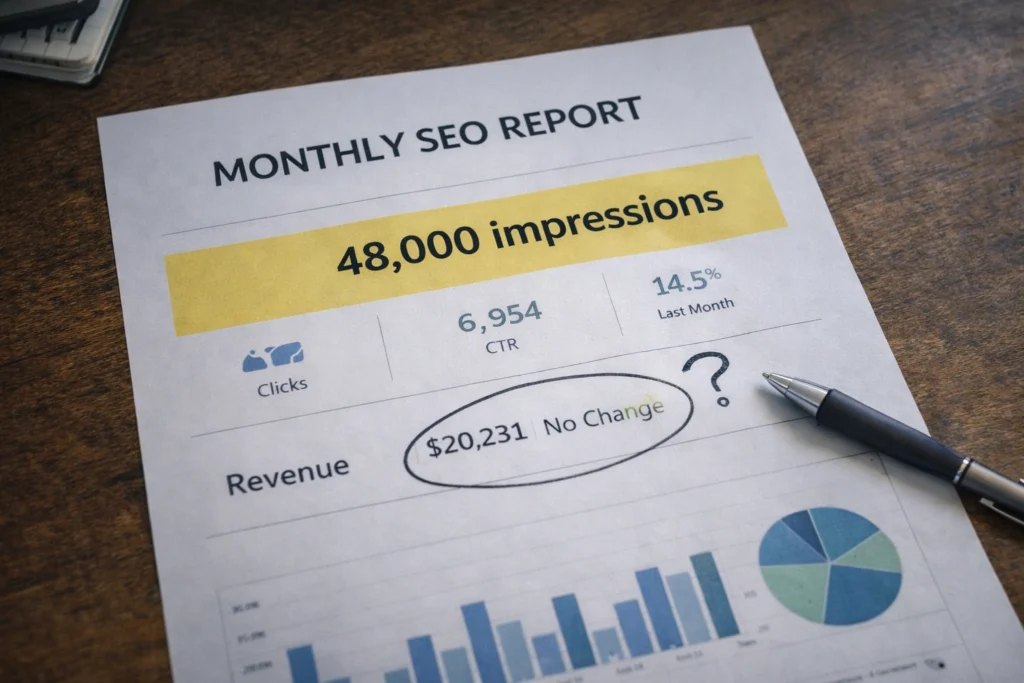
Past SEO failures damage client relationships because the damage rarely stops at poor results.
When rankings don’t move, agencies often default to blaming algorithm updates instead of admitting they targeted keywords with little or no real search volume. Over time, that breakdown usually shows up in two patterns.
The Common Pitfalls That Erode Trust
Agencies sometimes blame algorithm updates instead of admitting they targeted keywords nobody actually searches. When that happens, the cost of the mistake falls on you.
And if that wasn’t frustrating enough, reporting dashboards highlight impressive traffic numbers and impression counts while revenue stays flat. In the end, clients stop reading the reports altogether because nothing in them connects to business results.
When Promises Don’t Match Deliverables
If an agency guarantees a 5% traffic increase within the first month, you will naturally expect to see that number or something close to it since anything less feels like a promise that wasn’t kept.
At first, missing a traffic target is frustrating. But when the content budget, the conversion-tracking setup, and the reporting infrastructure all fall short, too, the pattern stops looking like underperformance and starts looking like negligence.
Transparency: The Foundation of Rebuilt Credibility
Transparency is what separates agencies worth trusting from those worth avoiding. Without it, clients have no way of knowing whether work is happening or money is disappearing.
So, let’s see what that looks like in practice.
Making SEO Processes Visible to Clients
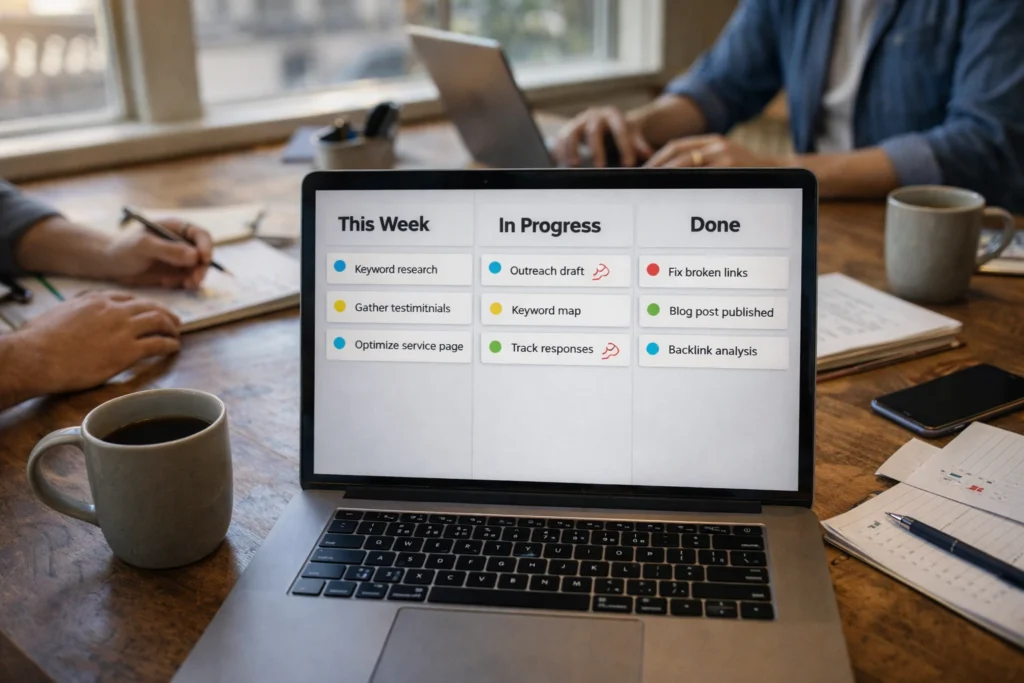
In our work with businesses recovering from poor agency experiences, visible workflows are consistently the first thing that rebuilds confidence. When you can see which pages got optimised this week and what tasks are scheduled for next Tuesday, the anxiety of wondering whether any real work is happening disappears.
Shared task boards make this possible by breaking work into specific activities: prospecting relevant websites, drafting outreach emails, and tracking responses. Progress then stops being something you hear about and becomes something you can see and verify for yourself.
Real-time dashboards take transparency a step further. Instead of waiting for a monthly PDF, you log in whenever you want and check ranking movements, traffic changes, and conversion data without sending a single email.
Setting Realistic Expectations from Day One
Visible workflows only rebuild trust if the expectations behind them were honest from the start. For example, competitive keywords in saturated markets typically need eight to twelve months of consistent work. And that honesty alone saves months of frustration on both sides.
Beyond timelines, a trustworthy agency will tell you that technical issues like slow load times, broken redirects, and poor mobile responsiveness need addressing before content work begins. Without fixing those first, even well-written content won’t rank.
What Effective Reporting Looks Like in Practice
Good reports connect ranking changes to business outcomes like leads and revenue, not just keyword positions. They show which pages climbed and which stalled, break traffic down by channel, and sit conversion data alongside rankings so nothing gets hidden behind vanity metrics.
Time comparisons are just as important. Month-over-month trends reveal whether progress is steady or influenced by seasonal demand. If your agency predicted those patterns during the strategy phase, the data confirms they understood your market before launching anything. If they didn’t, that’s worth questioning.
Reports should also explain what’s happening with your competitors. For instance, a position drop could mean a competitor stepped up their content efforts, or it could mean your own site has technical issues slowing it down.
Pro tip: Ask your agency which reporting tools they use. Reliable agencies typically work with tools like Google Search Console, Ahrefs, or Looker Studio rather than building custom dashboards that obscure where the numbers actually come from.
Building Accountability Through Process Improvements

Imagine discovering three months into a campaign that the strategist who built your entire SEO plan left the agency in month one. Nobody documented anything. The new person is starting from scratch with your budget.
That’s not a hypothetical. It happens constantly, which is why accountable agencies build processes like these into every campaign:
- Milestone Check-ins: Catching underperforming campaigns every two weeks means there’s still budget left to course correct before things spiral.
- Documented Workflows: When a team member leaves mid-campaign, written processes ensure the next person picks up exactly where they left off.
- Quality Reviews: One pre-publish review catches thin content before Google indexes it. This can save months of recovery work on pages that never should have gone live.
When you’re evaluating an agency, ask directly how they handle team changes and what their review process looks like before content goes live. Vague answers tell you everything you need to know.
Choosing an Agency That Values Your Trust
Choosing the right SEO agency after a bad experience comes down to one thing: proof over promises. Ask to see real case studies from businesses in your industry, request dashboard access before signing anything, and pay attention to how they handle your questions. Agencies worth trusting answer directly.
If something goes wrong mid-campaign, the agency you want is the one that calls you first. Setbacks happen in SEO. What separates good partners from bad ones is whether they explain what happened and what changes next, or go quiet and hope you don’t notice.
Ready to work with an agency that shows its work from day one? Contact H-Mag today to start a white-hat SEO strategy built on transparency, measurable results, and clear accountability.
